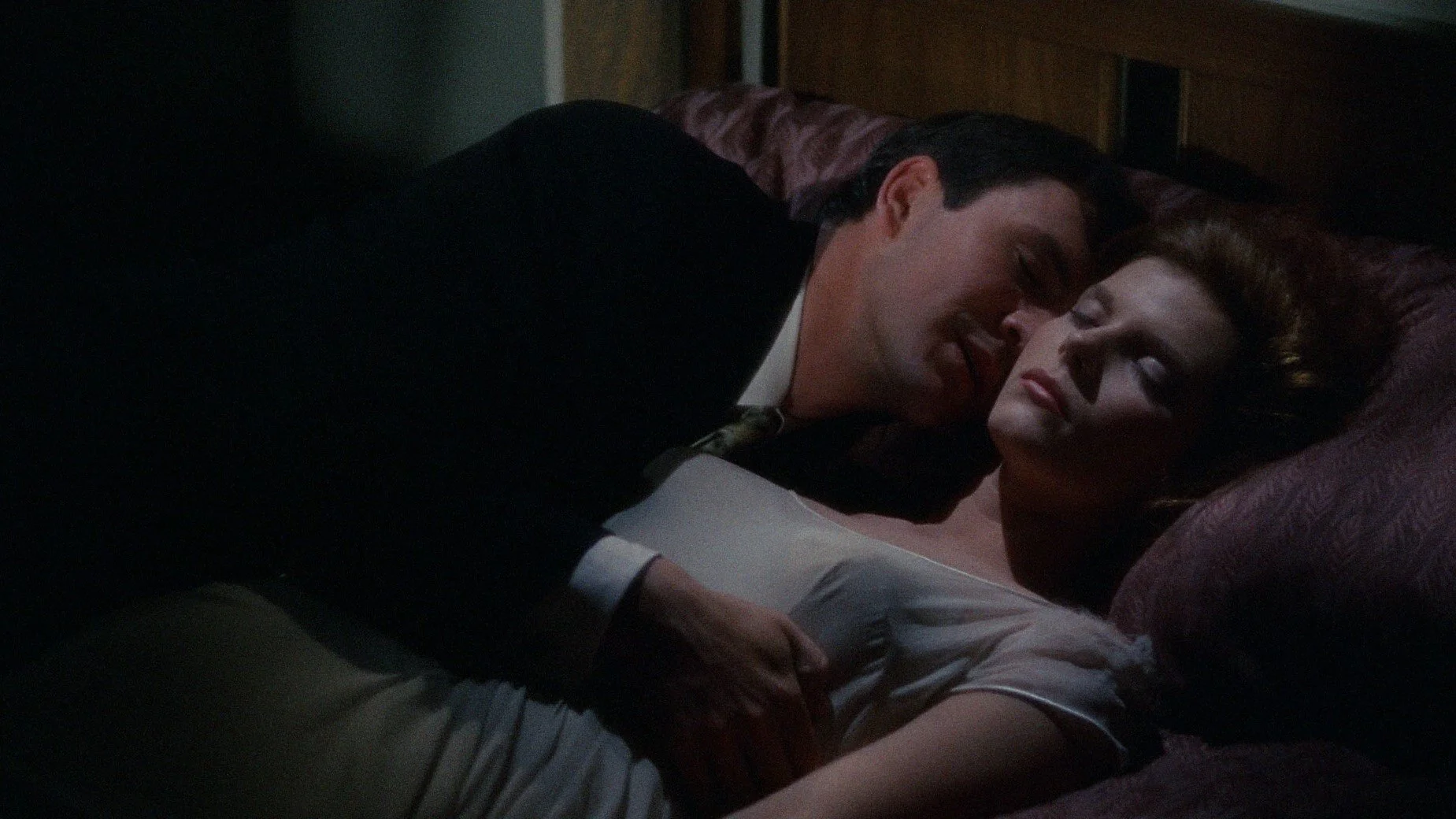
The Collector (1965)
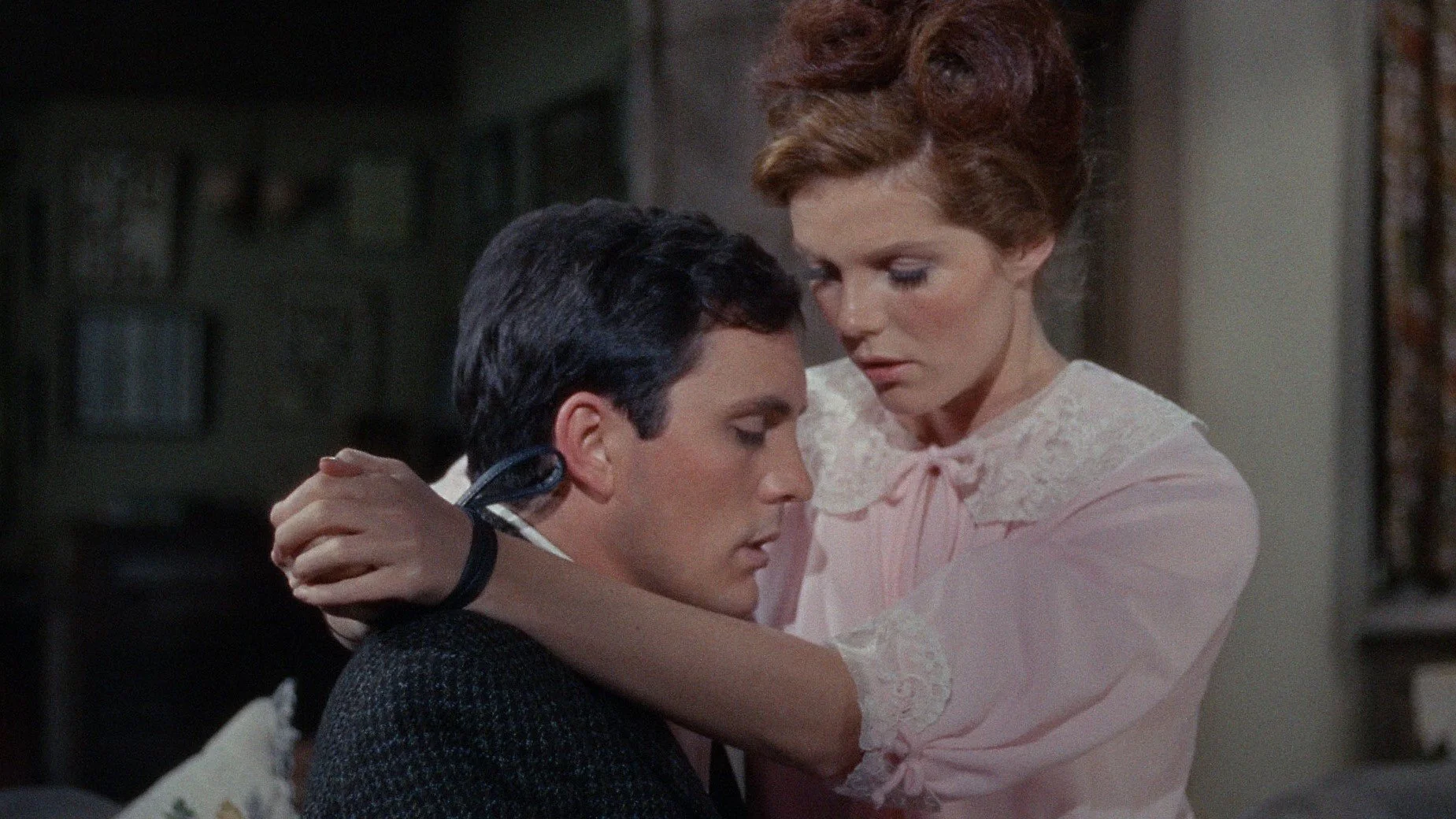
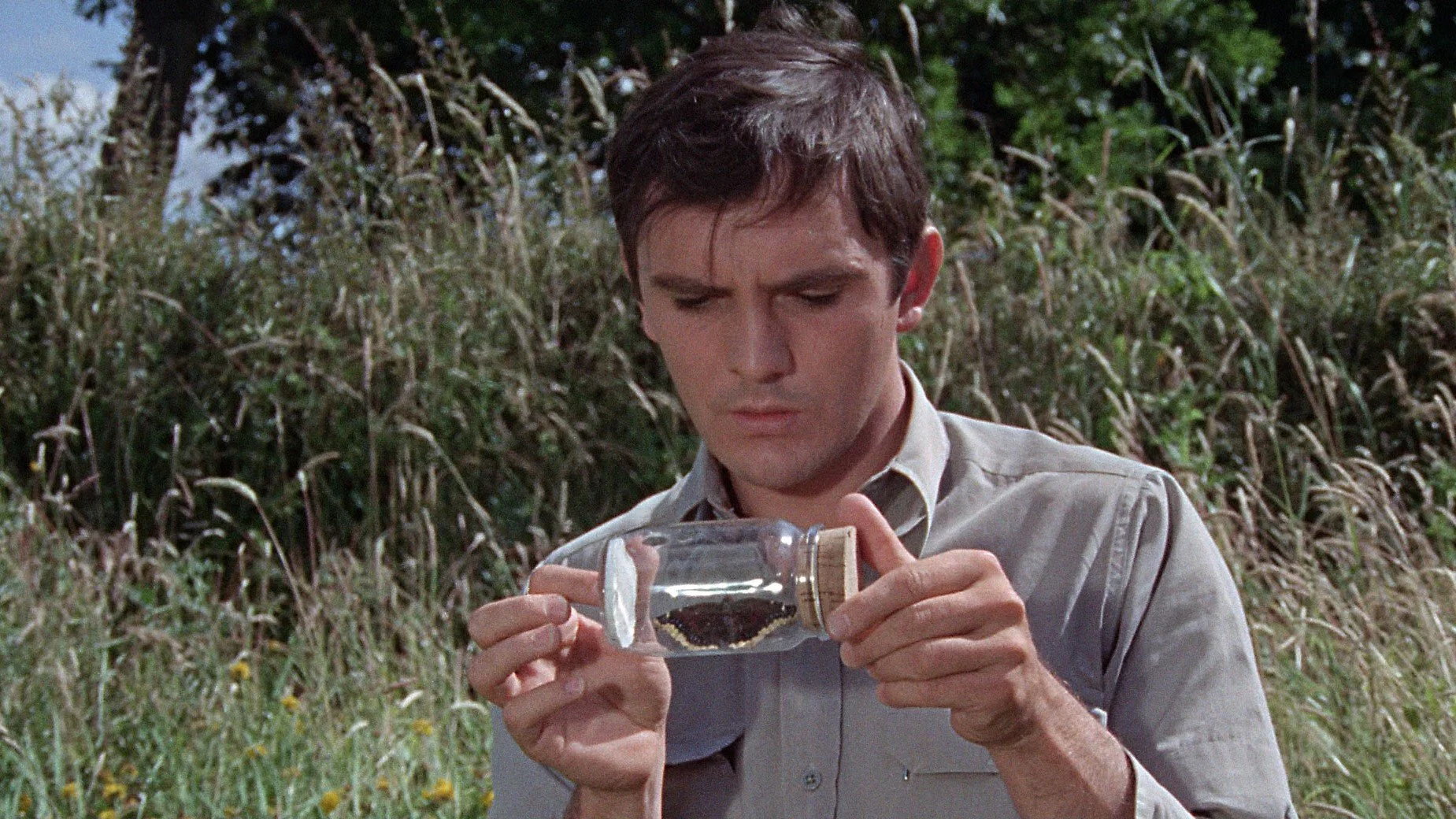
In 1963, British author John Fowles published The Collector, a psychological thriller about a lonely butterfly collector who abducts a young art student and imprisons her in the cellar of his country home. Two years later, director William Wyler brought the story to the screen in an adaptation starring Terence Stamp as Frederick Clegg and Samantha Eggar as Miranda Grey.
The premise is deceptively simple. Clegg doesn't see himself as a monster. He believes that if he can possess Miranda, isolate her from the outside world, and provide for her material needs, she might eventually fall in love with him. Miranda, however, understands that captivity is not love, and that her captor's carefully constructed fantasy has left little room for her humanity.
The novel and film explore the disturbing distance between obsession and affection, possession and intimacy, and the stories people tell themselves to justify their actions.
For most readers and viewers, The Collector is a work of fiction. But for a handful of real-life killers, its themes of captivity and control appear to have crossed the boundary between the imagined and the real.
Their names are Christopher Wilder, Robert Berdella, and Leonard Lake. Their connections to The Collector are not identical. In one case, the evidence is an annotated book found among the killer's final possessions. In another, it is a reported admission about the film's lasting influence. In the most chilling example, a killer's own diary documents a fantasy that he named after the novel's captive protagonist.
Christopher Wilder: The Beauty Queen Killer
Christopher Wilder was a fashion photographer whose name became synonymous with one of the most notorious killing sprees of the 1980s. Known as the Beauty Queen Killer, Wilder targeted young women and girls, posing as a modeling agent who discovered them and desired to photograph them for a test shoot.
In 1984, Wilder embarked on a cross-country crime spree in which he abducted, sexually assaulted, and murdered multiple victims. His apparent charm and carefully cultivated image helped him gain the trust of the women he approached. He reportedly wore the pastel suits popularized by Miami Vice, projecting a fashionable image that lent credibility to his claims of having power in the modeling industry.
Some women accepted his offer, while others were abducted by force. One of those women was sixteen-year-old Tina Marie Risico. She was his single case of prolonged captivity.
Risico was abducted from California at the Del Amo Fashion Center in April 1984. She went with Wilder willingly, believing his claims about making her a superstar model. Once they reached a secluded area, he pulled a gun on her and took her to a hotel room where he sexually assaulted her. Risico later described being caressed by a knife, subjected to electric shocks, and forced to obey in order to survive.
After her abduction, Wilder did something different with Risico than he’d done with any of his other victims: he kept her alive. He believed she could help him find more women.
What followed was a nine-day journey across the country. They traveled east through Arizona, Missouri, Illinois, Indianapolis, New York, and Massachusetts.
Wilder forced her to assist him in approaching and abducting two other victims before eventually releasing Risico at Logan Airport in Boston where he gave her a thousand dollars and bought her a ticket home.
Wilder's own life ended the next day, during a confrontation with police in New Hampshire. After his death, a copy of The Collector was found among his possessions.
The copy was described as marked up, suggesting that whoever had read it, engaged with its contents quite closely. The parallels between The Collector and his crimes are striking enough to invite examination. Both the novel and Wilder's crimes involve women being treated as objects to be possessed and controlled. His captivity of Risico, in particular, brings to mind the novel's central dynamic of a captor imposing his own private reality on a captive.
Risico has stated that she thinks she survived due to her not showing much emotion. "I never screamed. I never retaliated. I succumbed and, you know, was vulnerable to him [by letting him have complete control]." She has stated that she was able to look at her survival as “a game” that she could win. Due to her experience with early childhood neglect and sexual abuse, she had an innate understanding of an abusers need for absolute control.
A psychologist that worked on the case and interviewed Risico afterwards had a similar view, "She, the captive, captivated the captor into seeing her differently, seeing her as somebody who had a life that aught to be saved" through "finding ways to be totally compliant on the surface but calculating underneath."
Robert Berdella: A Dark Fantasy
Robert Berdella became known as the Kansas City Butcher, when he committed a series of kidnappings, sexual assaults, tortures, and murders in Missouri during the 1980s. His victims were men whom he held captive in his home for up to six weeks at a time.
Berdella's crimes involved both prolonged captivity and systematic abuse. He documented aspects of his crimes photographically, creating a record of the violence he inflicted on his victims. This parallels the way that the butterfly collector would photograph his childhood crush, Miranda, in both the film and novel.
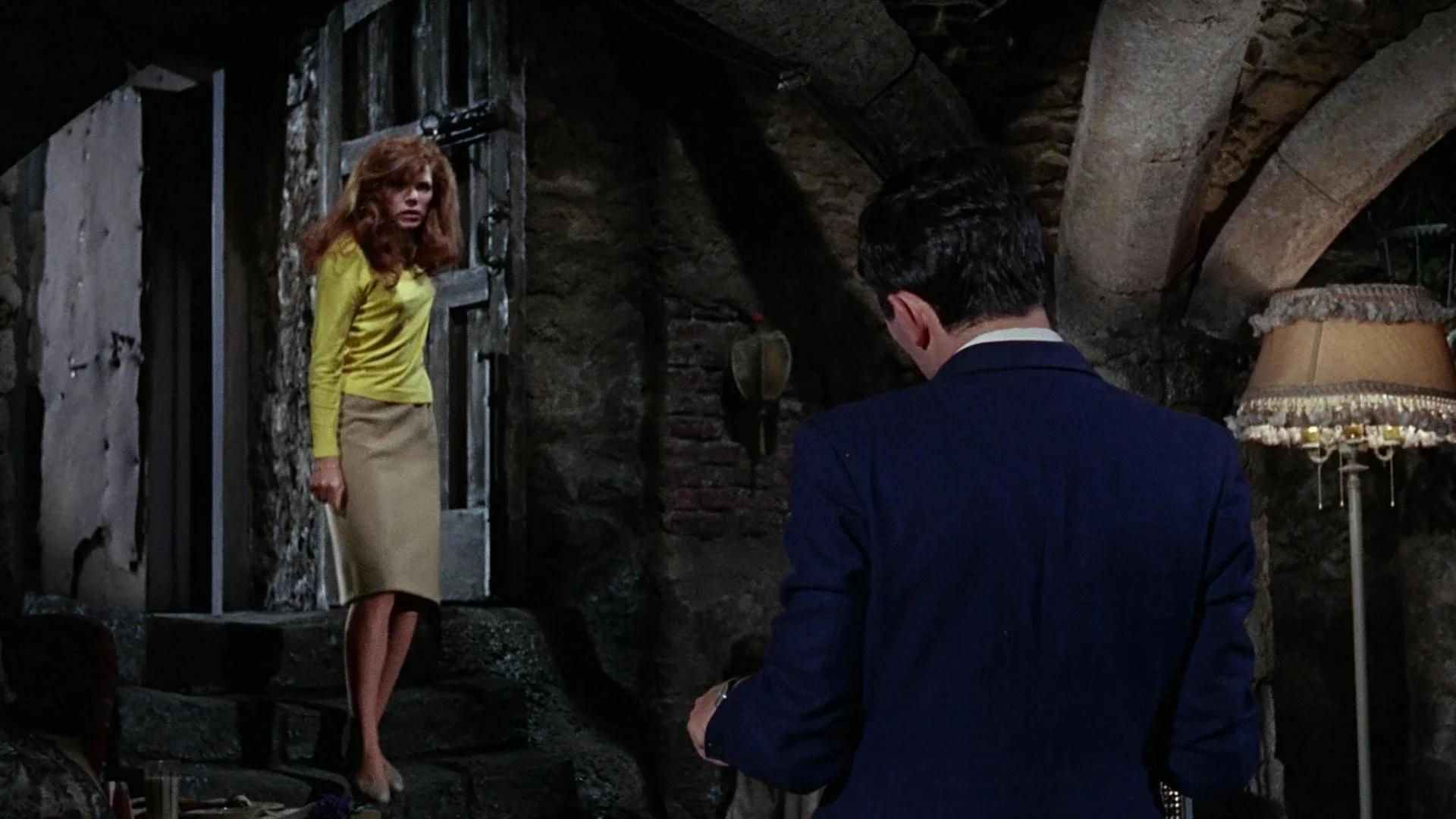
Unlike the uncertain connection between Wilder and the novel, Berdella reportedly spoke directly about being influenced by the 1965 film adaptation.
In an account of his confession, Berdella described the effect it had on his imagination:
“A film that I saw as a teenager that I guess left a lasting fantasy, a dark fantasy in my mind, was a film called The Collector.”
He went on to explain the significance of that memory on his crimes and modus operandi:
“The movie just gave me the framework to be able to fantasize it.”
Berdella connected that fantasy to the period when he began acting on it, stating that in 1984 he started allowing some of his darkest fantasies to become his reality.
Leonard Lake: Operation Miranda
Of our three serial killers, Leonard Lake presents the most extensively documented connection to The Collector.
Lake, alongside his accomplice Charles Ng, were responsible for a series of kidnappings, sexual assaults, and murders in California. The pair became known as the Sex Slave Killers and operated from a remote property where Lake had constructed an underground bunker. Victims were held captive there, and investigators ultimately uncovered evidence of approximately 25 murders.
Lake's connection to The Collector went beyond a resemblance between his crimes and the fictional story. His own diary documented a longstanding obsession with the novel and its central character, Miranda Grey.
In a diary entry dated February 19, 1983, Lake wrote:
“Ah, ‘The Collector’. Has it really been near twenty years I’ve carried this fantasy? And Miranda… how fitting. My lovely little prisoner of the future.”
It is said that Lake first read the novel when he was seventeen. In both the novel and Wyler's film adaptation, Miranda is the young woman abducted and imprisoned by Frederick Clegg. Lake adopted her name for his own scheme, which became known as Operation Miranda. Throughout their captivity, Lake and Ng reportedly referred to each of their female victims as Miranda, a detail documented in VHS tapes they labeled “M-Ladies.”
His diary continued to document the development of his fantasy. In an entry reflecting on the previous year when he recorded a television broadcast of the film adaptation and started the construction of his bunker, he wrote: “1983 was the year of Miranda.” Together, these details establish a deliberate connection between the story he had carried in his imagination for years and the captivity scheme he was preparing to enact.
Although his accomplice did not share the same inspiration, he became a willing participant in the scheme Lake envisioned. In a video diary recorded by his accomplice, Lake describes his plan to create the perfect woman, which he refers to as an 'off the shelf lover' that is one hundred percent compliant to his demands.
In his own words:
“What I want is an off the shelf sex partner. I want to be able to use a woman whenever and however I want. And when I’m tired or bored or uninterested, I simply want to put her away. Lock her up in a little room. Put her out of my sight, out of my life… I believe that if I can construct a holding cell, a place where I can put such a woman, a facility that is so stark and so empty, so cold, so quiet, so totally removed from the world, that I can quickly condition a young woman to cooperate with me fully.”
When Fiction Crosses Boundaries
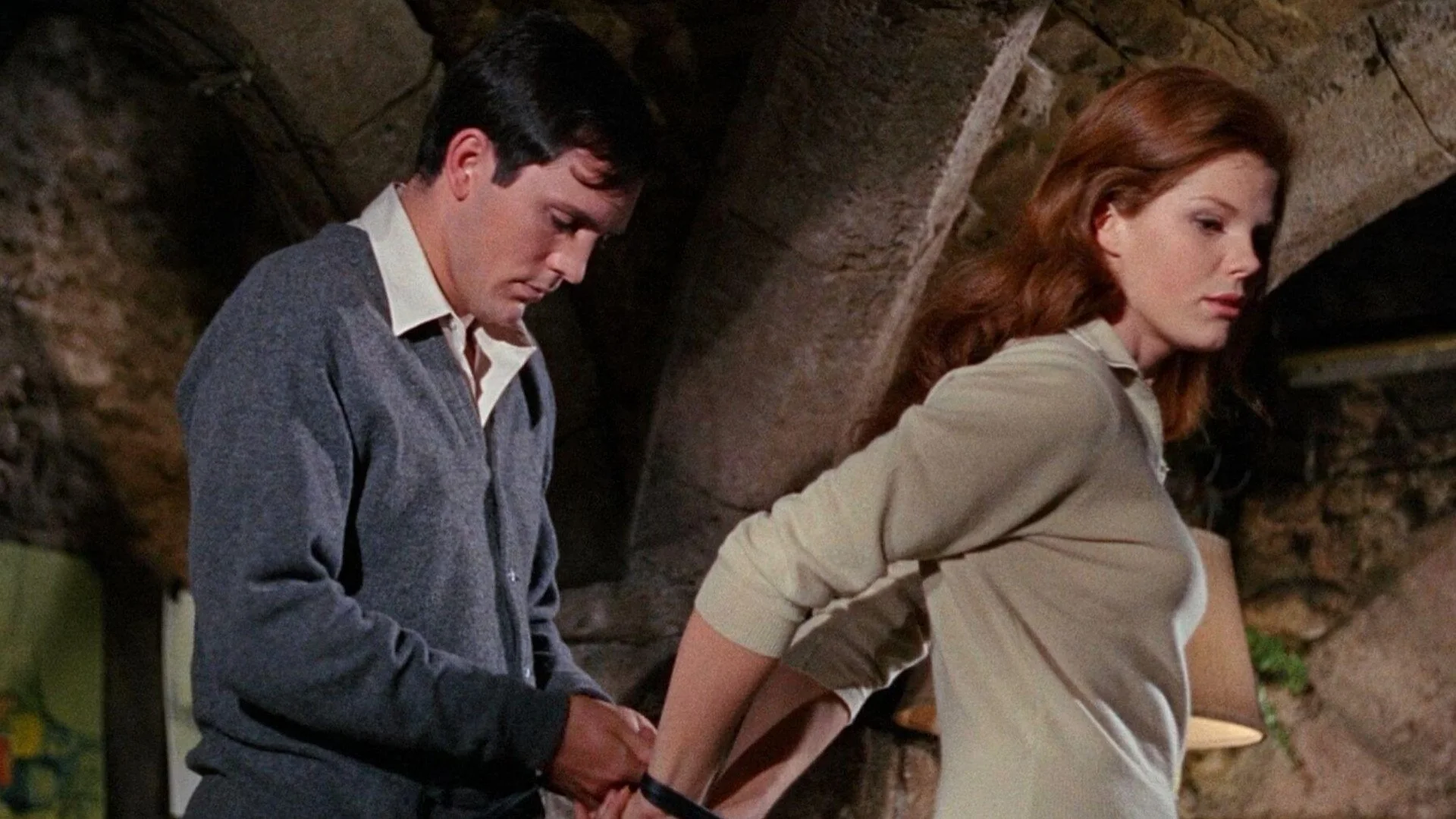
At the heart of The Collector is the belief that another human being can be possessed, controlled, and made to fit a private fantasy. The captive is no longer treated as a person with her own desires, boundaries, and will, but as someone whose purpose is to fulfill the captor's desires. It is this distortion of human connection, in which possession is mistaken for a form of intimacy, that makes the story so disturbing in light of the real-life cases discussed here.
In Wyler's film, the chemistry between its leads and the apparent tenderness woven into Frederick's behavior can make his fantasy of keeping Miranda feel, at moments, almost romantic. In 1965, the film was even marketed as, “Almost a Love Story.” The plot invites us to consider the fantasy of being wanted so completely that someone would do anything to keep us close, while forcing us to confront the horror of what that desire becomes when the other person's freedom no longer matters.
As a viewer, it can be surprisingly easy to become absorbed in that fantasy, even when its underlying reality is horrifying. This raises a larger question about storytelling itself: how does the way a story is told shape our feelings about what it depicts, and what responsibility does a filmmaker have when the very qualities that make a disturbing story so engaging also make its central fantasy seem desirable? The challenge is not simply to tell a compelling story, but to understand what that story invites us to romanticize.